The Sky at Night (1957)
NR30m70 seasonsReturning Series8.4(14)
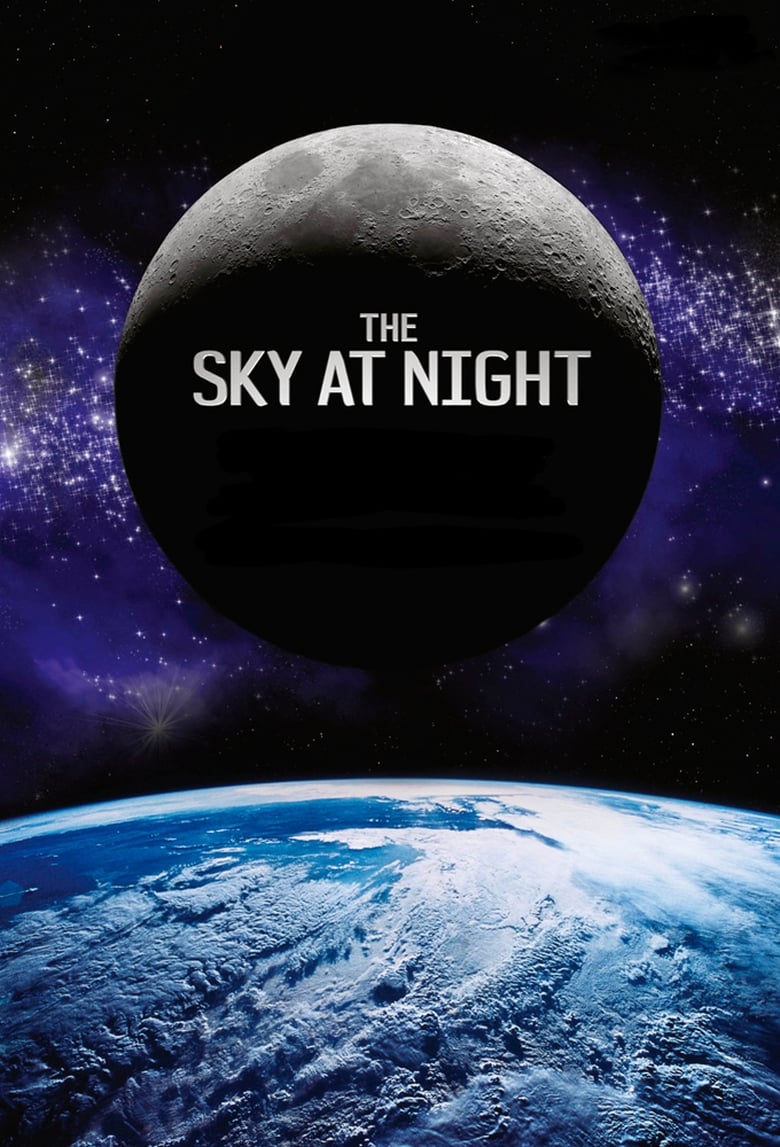
Your monthly journey through the fascinating world of space and astronomy with the latest thinking on what's out there in space and what you can see in the night sky.

Your monthly journey through the fascinating world of space and astronomy with the latest thinking on what's out there in space and what you can see in the night sky.
Jan 10, 1980
How many people know the meaning of terms such as ' right ascension' and ' declination '? And what exactly is the celestial sphere? Mapping the sky presents problems different from those of mapping the earth. Patrick Moore talks about sky-maps, and how astronomers have worked out their own equivalent of latitude and longitude.
Feb 7, 1980
Saturn is generally regarded as the most beautiful object in the sky, but this year it has an unusual appearance. For the first time since 1966 the rings are edgewise-on to the Earth, and even large telescopes will show them as no more than a slender line of light. Paul Doherty, an enthusiastic observer of Saturn, joins Patrick Moore to talk about the interesting features of Saturn which can be seen when the rings are almost invisible.
Mar 20, 1980
Exactly 50 years ago, in 1930, the planet Pluto was discovered by a young research student named Clyde Tombaugh. Since that time Pluto has set puzzle after puzzle. It is smaller than expected; it has an unusual path: and it has a moon, Charon, which is one-third the size of itself. Today, at the age of 77, CLYDE TOMBAUGH is one of America's most respected astronomers. For this programme Patrick Moore flew to Arizona to meet Professor Tombaugh and to ask him what he now thought about the curious planet he discovered half a century ago.
Apr 17, 1980
On the summit of Mount Hopkins, in Arizona, is the world's most revolutionary observatory, containing the multiple mirror telescope. Instead of one great mirror, there are six all working together and controlled by a laser beam. Patrick Moore visits the observatory, and looks at this remarkable new telescope.
May 13, 1980
What lies at the centre of our galaxy? Are there masses of brilliant stars, or is there something even more significant, such as a Black Hole which is swallowing up any stars which move too close to it? Patrick Moore and Heather Couper explore this mystery.
Jun 10, 1980
The Solar Telescope ' Kitt Peak, in Arizona, is America's national observatory. One of its most important instruments is the ingeniously-designed telescope used for studying the sun. Patrick Moore visits Kitt Peak , to see this remarkable telescope and talk to the scientists who are carrying out research with it.
Jul 10, 1980
What are the quasars, which may be close to the edge of the universe as seen from Earth? Are they made up of exploding stars, or are they the centres of galaxies in which great outbursts have taken place? Patrick Moore talks to Professor Alec Boksenberg about these strange, super-luminous objects which have set astronomers so many problems since they were first identified less than 20 years ago.
Aug 6, 1980
In December 1978 America's Pioneer Venus I reached its target. Since then it has been orbiting Venus, and mapping the planet's surface by means of radar. Venus is not the kind of world it was once believed to be; it has volcanoes, high plateaux, and deep canyons. In this programme Dr Garry Hunt joins Patrick Moore to describe the new findings, which have changed many of our past theories about this strange world.
Sep 4, 1980
In Northern Arizona there is a vast hole in the desert, almost a mile across and 600 feet deep, known as Meteor Crater. It was blasted out in prehistoric times by a huge iron meteorite, and is the most perfectly preserved impact area known on Earth. Patrick Moore visits Meteor Crater, and goes down into what has been described as the oldest of all natural museums.
Oct 1, 1980
Patrick Moore , with the aid of a sundial at his Selsey home, explains why equinoxes occur, and shows how the seasons of the year vary, due to the tilt of the Earth's axis. Other planets in the solar system have different axial tilts and therefore different seasons; PATRICK MOORE compares them with those of our own world.
Oct 28, 1980
In the constellation of Aquila, the Eagle, there is a faint star known rather unromantically as SS433. Lately, however, it has proved to be very unusual. Probably the result of a tremendous stellar explosion long ago, it seems to be a star accompanied by a tiny object expelling jets of gas. This new kind of supernova remnant has been termed a scintar. Patrick Moore talks about this puzzling object to Paul Murdin , one of the astronomers who discovered it.
Nov 20, 1980
After a journey of over three years, Voyager 1 has reached Saturn-800 million miles from Earth. Last year the spacecraft bypassed Jupiter and sent back the most spectacular images ever seen of the planet and its satellites. Now it has arrived at Saturn and is transmitting pictures and scientific information about this most beautiful planet. Patrick Moore reports from the Mission Control Centre for Voyager at the Jet Propulsion Laboratory in Pasadena, California, with Dr Garry Hunt , and discusses the results with the American scientists responsible for the mission.
Dec 7, 1980
Meteors or shooting stars are familiar objects in the night sky. Several times during the year showers of meteors occur. One of them, known as the Quadrantid shower, will be at its maximum on 3 January and could provide an impressive display of cosmic fire-works. Patrick Moore tells about this interesting phenomenon and explains what observers should look for.