The Sky at Night (1957)
NR30m70 seasonsReturning Series8.4(14)
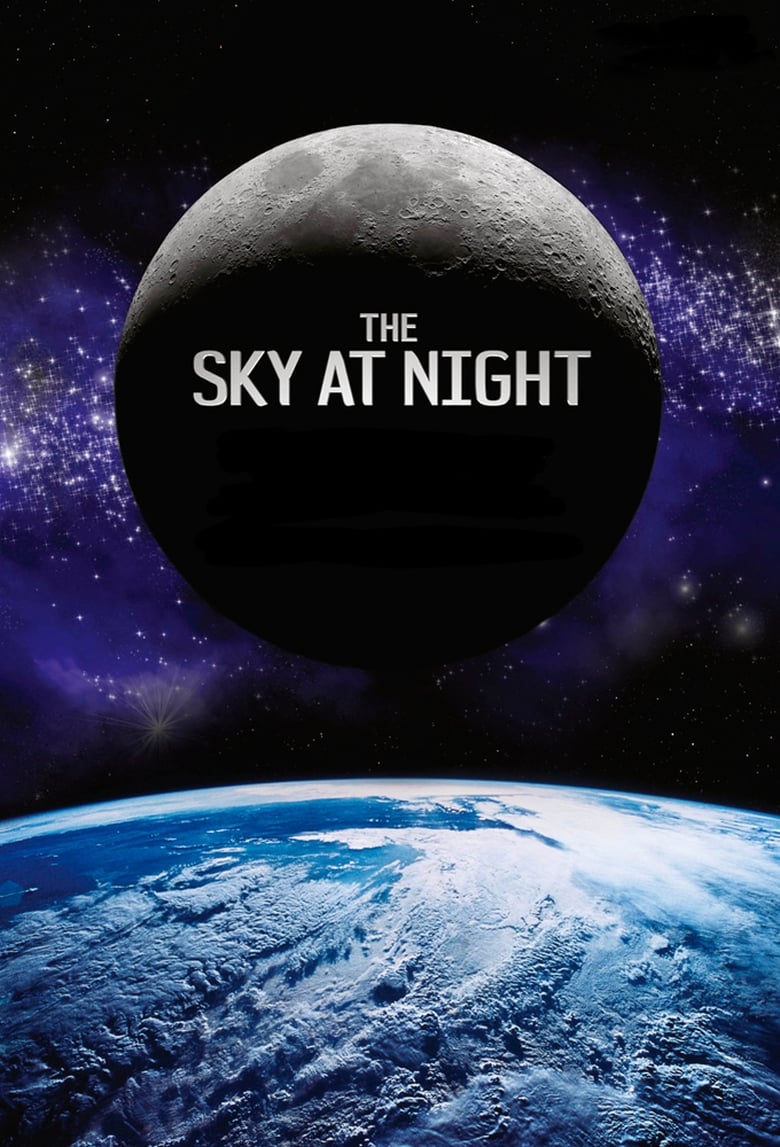
Your monthly journey through the fascinating world of space and astronomy with the latest thinking on what's out there in space and what you can see in the night sky.
Your monthly journey through the fascinating world of space and astronomy with the latest thinking on what's out there in space and what you can see in the night sky.
Jan 27, 1969
Man has just taken his first close look at the moon, and in a few months American spacecraft are expected to bring back samples of the moon's crust for analysis. At this turning point in lunar research, as the long history of earth-based observation gives way to first-hand experience, Patrick Moore sums up our present knowledge; Raymond Baxter discusses the significance of the new developments with Sir Bernard Lovell, Professor J.G. Davies, and Dr. J.H. Thomson at Jodrell Bank; and Patrick Moore describes the optical work done at the world's highest observatory, the Pic du Midi. Sequences in France made available by courtesy of the French Television Service
Feb 24, 1969
Without a telescope can you see the phases of Venus? The little star Alcor? The Great Nebula in Andromeda? Patrick Moore discusses what can or cannot be seen without telescopes and invites viewers to join in an experiment.
Mar 24, 1969
Jupiter is specially brilliant this month, but it is so remote that many of its mysteries are still unsolved. Patrick Moore discusses them with Terence Moseley Two bright planets are in the evening sky now. Venus is in the west, and at present two Russian spacecraft are on their way there. In this evening's The Sky at Night Patrick Moore gives the results of the investigation into whether anyone can see the crescent shape of Venus with the naked eye-which may help to clear up the mystery of the old references to 'the horned Venus.' Attention is then turned to the other brilliant planet, Jupiter—, the giant of the sun's family, with its belts, moons, and strange Red Spot. Patrick Moore is joined by Terence Moseley to discuss this remarkable world which is always changing; large enough to hold more than 1,000 earths, it is a fascinating object when seen through even a small telescope, if only because one never knows what to expect next!
Apr 21, 1969
Is it unlucky to see the new moon through glass? The moon has always been thought to have a powerful influence on the earth, causing not only tides but also good luck, bad luck, and even lunacy, according to its phases. Patrick Moore discusses with Henry Brinton, Bert Foord, weatherman and Dr. J. T. Hutchinson, a psychiatrist the scientific truths and popular superstitions about the moon's effects on the earth.
May 19, 1969
Two American spacecraft will fly past the planet Mars this summer and send back information which may help to answer the long-debated question, 'Is there life on Mars?' Patrick Moore discusses the latest Martian experiments with a biologist, Keith Reid.
Jun 16, 1969
Unique scientific observations are made on the rare occasions when Venus 'transits' - or crosses - the sun. Tonight's programme marks the bicentenary of Captain Cook's voyage to the South Pacific to observe a transit - on June 3, 1769 - during which he claimed Australia for Britain on his way home. Patrick Moore talks to Cdr. Derek Howse, R.N. about Cook's voyage and to Dr. Vinicio Barocas about the first astronomer ever to observe a transit, in 1639 - a twenty-year-old Lancashire curate, the Rev. Jeremiah Horrocks
Jul 14, 1969
Meteors and meteorites travel around space in their millions. A few reach the earth but most are burnt up in our atmosphere. Astronauts in space suits, moon bases and manned satellites will be unprotected by the atmosphere. Patrick Moore talks about meteors, and the danger they may pose to future astronauts and their equipment with Dr. N. H. Langton, a physicist who has studied this problem.
Aug 11, 1969
Does it ever rain on Mars? Are there clouds, winds, and storms? The Mariner probes have sent back new, fascinating information about the Red Planet, but even now there are many problems to be solved. Patrick Moore talks about the Martian climate and what future astronauts may expect to find there.
Sep 9, 1969
It is now over fifty years since Einstein astounded the worlds scientists with his revolutionary theories of Relativity. Patrick Moore discusses with Professor Samuel Tolansky the application of Einstein's theories to astronomy and their vital significance for space exploration.
Oct 7, 1969
Most stars remain unchanging over huge periods of time; but some continually vary in brightness. Only long observation can reveal their secrets, and much of this patient work is done by amateurs. Patrick Moore describes the different types of variable stars, and discusses with John S. Glashy the vital role of amateur observers
Nov 4, 1969
Patrick Moore describes The Moons of Saturn. Why are Saturn's 10 satellites so different from each other? Why does one of them orbit in the opposite direction from the others, and another appear brightest on one side as it rotates?
Dec 2, 1969
In the late 1970s a spacecraft may be sent on a 'tour' of four of the outer planets - Jupiter, Saturn, Uranus, and Neptune - using the gravity and orbital speed of each to boost it on to the next, and sending back photographs and scientific information. Patrick Moore discusses the chances of success for this ambitious project with Iain Nicolson, a British astronomer, and with Dr W.H. Pickering, head of America's unmanned scientific space programme.
Dec 24, 1969
'I believe 1969 may turn out the most famous year in all history.' So says Patrick Moore who, this afternoon, surveys the space highlights and astronomical achievements of 1969. He shows unique film of a Russian manned space-flight, and interviews leading American space scientists.